Uncategorized

Uncategorized

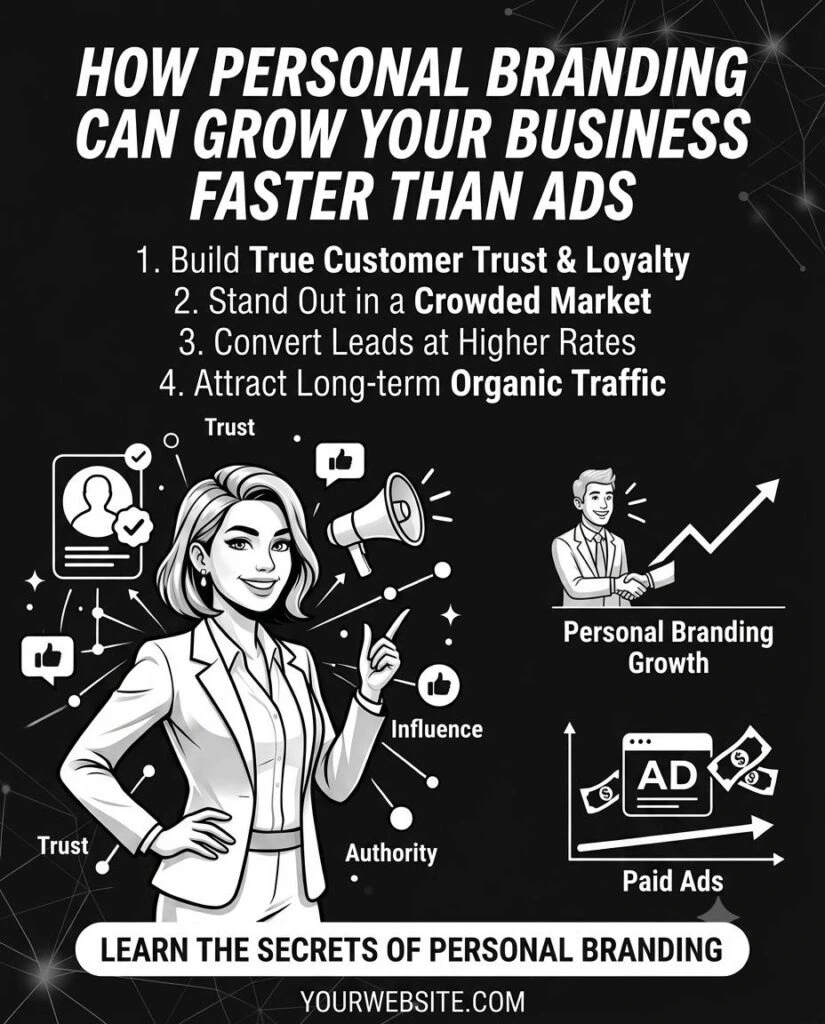
How Personal Branding Can Grow Your Business Faster Than Ads

In today’s competitive digital landscape, customers are no longer influenced solely by advertisements—they are influenced by people they trust. Personal branding is the process of building a unique identity that reflects your expertise, values, and personality, helping you stand out in your industry. Unlike paid advertisements, which stop delivering results once the budget is exhausted, a strong personal brand continues to attract opportunities, build credibility, and generate organic growth over time. When people consistently see you sharing valuable insights, solving problems, and demonstrating your knowledge, they begin to view you as an expert rather than just another business owner. This trust often leads to stronger customer relationships, higher engagement, and increased referrals. Whether through blog posts, social media content, videos, or public speaking, personal branding allows you to connect with your audience on a deeper level by showcasing authenticity and real experience. A well-developed personal brand also enhances the effectiveness of every marketing effort. Customers are more likely to click on your advertisements, engage with your content, or purchase your products when they already recognize and trust your name. Instead of constantly competing on price or spending heavily on advertising, businesses with strong personal brands create loyal communities that actively support and recommend them. In the long run, the combination of expertise, consistency, and authenticity becomes a powerful competitive advantage. While advertising is valuable for reaching new audiences quickly, personal branding creates lasting influence that continues to generate business opportunities long after an advertising campaign has ended. The most successful entrepreneurs understand that people buy from people they know, like, and trust, making personal branding one of the smartest long-term investments for sustainable business growth.
Uncategorized

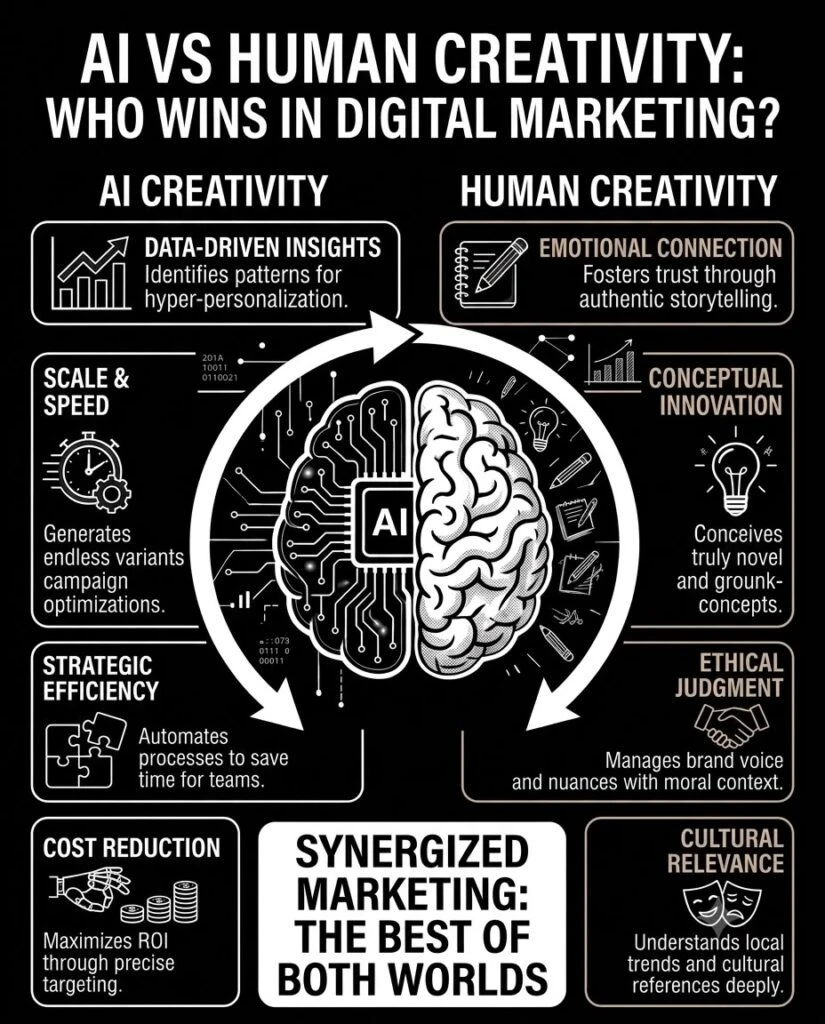
AI vs Human Creativity: Who Wins in Digital Marketing?

Artificial Intelligence (AI) has become one of the most powerful tools in digital marketing, helping businesses automate tasks, analyze customer data, create content, and personalize marketing campaigns faster than ever before. However, while AI excels at speed, efficiency, and data-driven insights, it lacks the emotional intelligence, originality, and strategic thinking that define human creativity. Successful marketing is not just about producing content—it is about telling compelling stories, understanding human emotions, building trust, and creating memorable brand experiences. These are areas where human marketers continue to play a vital role. Rather than competing against each other, AI and human creativity work best as partners. AI can handle repetitive tasks and provide valuable insights, allowing marketers to focus on innovation, storytelling, and meaningful customer connections. In 2026 and beyond, the businesses that achieve the greatest success will not be those that rely solely on AI or solely on human talent, but those that effectively combine the strengths of both to create smarter, more engaging, and more impactful marketing strategies.

Uncategorized

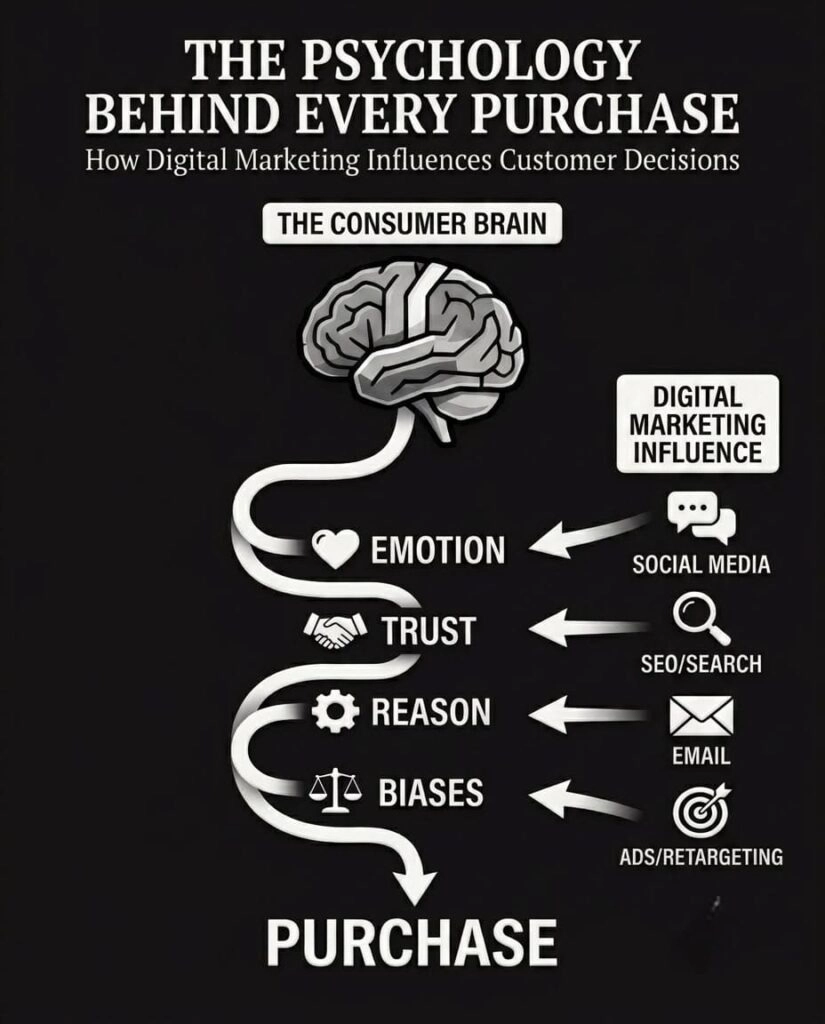
The Psychology Behind Every Purchase: How Digital Marketing Influences Customer Decisions

Have you ever wondered why you buy one product instead of another—even when they seem almost identical? The answer often lies not in the product itself, but in the psychology behind the buying decision. Every day, businesses use digital marketing techniques to influence how customers think, feel, and ultimately make purchasing decisions. Modern consumers are exposed to thousands of advertisements every day. Yet only a few capture their attention. Successful marketers understand that people don’t make decisions based on logic alone—they are heavily influenced by emotions, trust, social proof, and subconscious triggers. Understanding consumer psychology helps businesses create better marketing strategies while helping customers make informed decisions. Let’s explore the psychological principles behind successful digital marketing. The most successful digital marketing campaigns don’t simply advertise products—they understand people. Businesses that recognize customer emotions, build trust, create valuable experiences, and communicate honestly are far more likely to succeed. Psychology helps marketers understand why people buy, while digital marketing provides the tools to connect with customers at the right time, in the right place, and with the right message. As technology and AI continue to reshape the digital landscape, understanding human behavior will remain one of the most valuable skills in marketing. Businesses that combine data-driven strategies with genuine empathy will build stronger customer relationships and achieve sustainable growth in the years ahead. Every purchase begins long before a customer clicks the “Buy Now” button. Behind every buying decision lies a complex mix of emotions, habits, beliefs, and psychological triggers. Whether someone is purchasing a smartphone, booking a holiday, or ordering dinner online, their decision is rarely based on logic alone. Digital marketing is successful because it understands how people think. Rather than simply promoting products, marketers create experiences that influence attention, build trust, spark curiosity, and encourage action. According to behavioral research, emotions play a significant role in decision-making, while logic is often used afterward to justify the choice. This is why the world’s most successful brands invest heavily in storytelling, branding, customer experience, and personalization instead of focusing only on product features. Understanding these psychological principles helps businesses market more effectively while helping consumers recognize the factors influencing their choices.

Scroll to Top